

Domain trademark issues arise when a domain name registered by one party conflicts with the trademark rights of another party. A domain name is considered a trademark if it identifies a source of goods or services and is used to distinguish one business from another. Trademark owners may take legal action against domain owners who use their trademark in a domain name without permission or in a way that creates confusion among consumers.
Trademark infringement can occur when a domain name is identical or confusingly similar to a registered trademark. In these cases, the trademark owner may file a lawsuit against the domain owner to force them to relinquish the domain name or seek damages for infringement. Trademark owners can also file a complaint with the Internet Corporation for Assigned Names and Numbers (ICANN) or the World Intellectual Property Organization (WIPO) to resolve domain trademark disputes through a process known as Uniform Domain-Name Dispute-Resolution Policy (UDRP).
In some cases, domain owners may use a trademark in a domain name in a way that is considered fair use. For example, a domain owner may use a trademark in a domain name to provide information about the trademark owner’s products or services or to express their opinion about the trademark owner or their products. In these cases, the domain owner may be able to defend against trademark infringement claims by showing that their use of the trademark is non-commercial and does not create confusion among consumers.
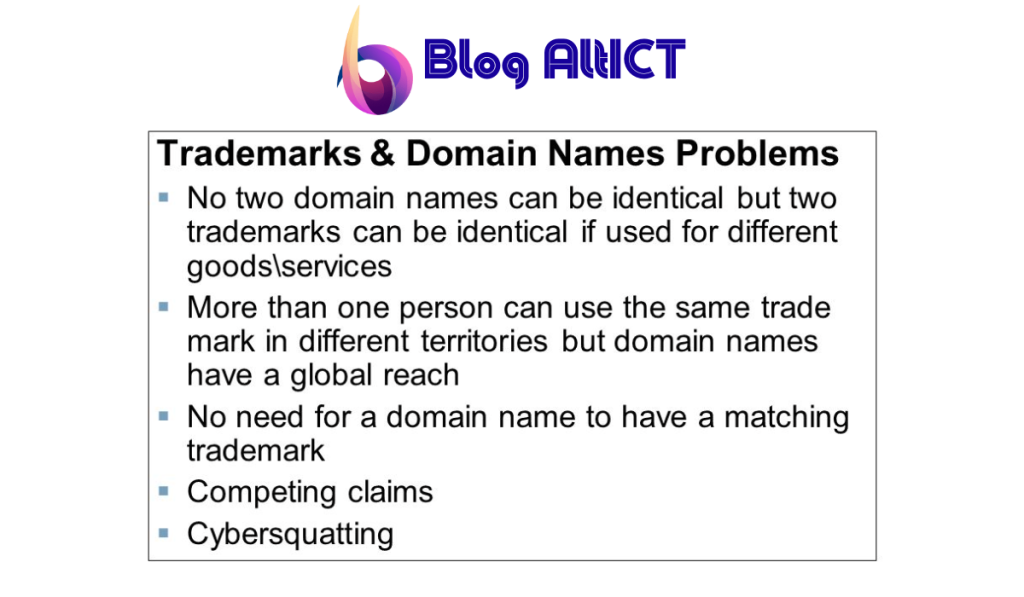
Another issue that can arise in domain trademark disputes is the issue of domain name squatting or cybersquatting. This occurs when a party registers a domain name that is identical or similar to a trademark with the intent of profiting from the goodwill associated with the trademark. Domain name squatters may offer to sell the domain name back to the trademark owner for a large sum of money, or they may use the domain name to generate revenue through advertising.
To avoid domain trademark issues, businesses should take steps to protect their trademarks online. This includes registering their trademarks with the appropriate authorities, monitoring the use of their trademarks online, and taking legal action against infringers when necessary. Businesses should also consider registering all possible domain name variations of their trademark to prevent others from registering them.
In conclusion, domain trademark issues can have significant legal and financial implications for businesses. Trademark infringement can occur when a domain name is identical or confusingly similar to a registered trademark. Domain name squatting can also be an issue when parties register domain names that are similar to trademarks with the intent of profiting from the goodwill associated with the trademark. To avoid these issues, businesses should take steps to protect their trademarks online and take legal action when necessary to protect their rights.


Leave a Reply