

Virtual Private Server (VPS) hosting is a popular web hosting service that provides users with a virtual machine that runs on a physical server. It is a popular option for businesses and individuals who require more control and resources than shared hosting but do not require a dedicated server.
How does VPS hosting work?
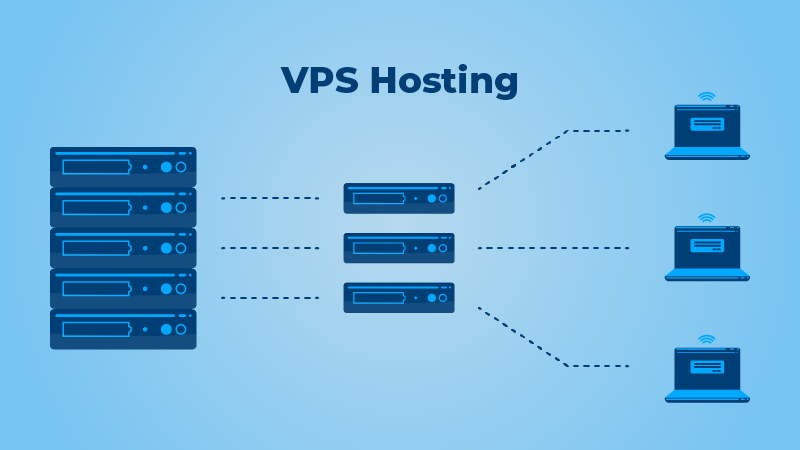
VPS hosting works by creating a virtual machine on a physical server that is partitioned into multiple virtual servers. Each virtual server has its own operating system, resources, and software, allowing users to have complete control over their server environment. VPS hosting is managed by a hosting provider who takes care of the physical server’s maintenance, security, and software updates.
Advantages of VPS hosting

- More resources: VPS hosting provides users with more resources, including CPU, RAM, disk space, and bandwidth than shared hosting. This allows users to handle more traffic and run more resource-intensive applications.
- Scalability: VPS hosting is scalable, allowing users to easily upgrade or downgrade their hosting plan as their website grows.
- More control: VPS hosting provides users with more control over their server environment, including the ability to install custom software, configure server settings, and access the server via SSH.
- Better security: VPS hosting is more secure than shared hosting since each virtual server is isolated from the others. This reduces the risk of security breaches caused by other users on the same server.
Disadvantages of VPS hosting
- Technical expertise required: VPS hosting requires some technical expertise to set up and manage, including knowledge of server administration, software installation, and troubleshooting.
- More expensive than shared hosting: VPS hosting is more expensive than shared hosting, but it provides users with more resources and control over their server environment.
- Limited resources: While VPS hosting provides more resources than shared hosting, it is still limited by the physical server’s resources. Users who require more resources than a VPS can provide may need to consider a dedicated server.
Conclusion
VPS hosting is a popular web hosting service that provides users with more control and resources than shared hosting. It is an ideal option for businesses and individuals who require more control over their server environment, scalability, and better security. However, VPS hosting does require some technical expertise to set up and manage, and it is more expensive than shared hosting. As such, users should carefully consider their hosting needs and choose a hosting plan that best suits their website’s requirements.


Leave a Reply