

Reseller hosting is a type of web hosting service that allows users to resell hosting resources to their own clients. It is a popular option for web designers, developers, and entrepreneurs who want to provide web hosting services to their clients without the expense and hassle of managing their own physical servers.

How does reseller hosting work?
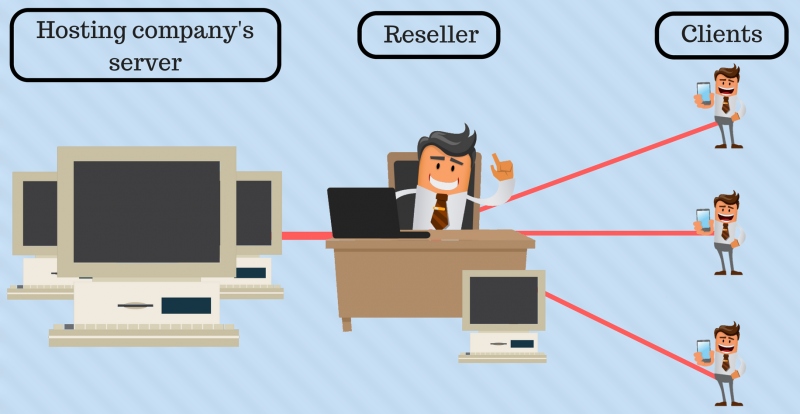
Reseller hosting works by providing users with a hosting account that they can resell to their own clients. The user purchases a reseller hosting plan from a hosting provider, which provides them with a set amount of hosting resources, including disk space, bandwidth, and email accounts. The user can then create hosting accounts for their own clients, each with their own control panel and login credentials.
The hosting provider takes care of the physical server’s maintenance, security, and software updates, allowing the user to focus on managing their own clients and providing technical support.
Advantages of reseller hosting
- Cost-effective: Reseller hosting is cost-effective since the user only pays for the resources they use and does not need to invest in and maintain their own physical server.
- Scalability: Reseller hosting is scalable, allowing users to easily add or remove resources as their business grows or experiences increased demand.
- Easy to manage: Reseller hosting is easy to manage since the hosting provider takes care of the physical server’s maintenance, security, and software updates.
- Additional revenue stream: Reseller hosting provides users with an additional revenue stream since they can resell hosting resources to their own clients.
Disadvantages of reseller hosting
- Technical expertise required: Reseller hosting requires technical expertise to set up and manage, including knowledge of server administration, software installation, and troubleshooting.
- Dependency on hosting provider: Reseller hosting is dependent on the hosting provider’s infrastructure, and users may experience downtime or performance issues if the provider experiences an outage or network problems.
- Limited control: Reseller hosting provides users with limited control over their server environment since they are sharing resources with other users on the same server.

Conclusion
Reseller hosting is a web hosting service that allows users to resell hosting resources to their own clients. It is an ideal option for web designers, developers, and entrepreneurs who want to provide web hosting services to their clients without the expense and hassle of managing their own physical servers. Reseller hosting is cost-effective, scalable, and easy to manage. However, reseller hosting requires technical expertise to set up and manage, and users are dependent on the hosting provider’s infrastructure. As such, users should carefully consider their hosting needs and choose a reseller hosting plan that best suits their business requirements.



Leave a Reply