
Introduction:

The Domain Name System (DNS) is a crucial part of the internet that translates domain names into IP addresses. Every website and internet-connected device has an IP address, which is a unique set of numbers that identifies the device on the internet. However, IP addresses are difficult for humans to remember, so domain names were created as an alternative.
What is DNS?
DNS is a hierarchical and distributed naming system that maps domain names to IP addresses. It allows users to access websites and other internet resources by entering domain names into web browsers, rather than remembering the IP addresses associated with those resources. DNS also helps to maintain and manage the internet by providing a unified system for naming and addressing resources.
How Does DNS Work?
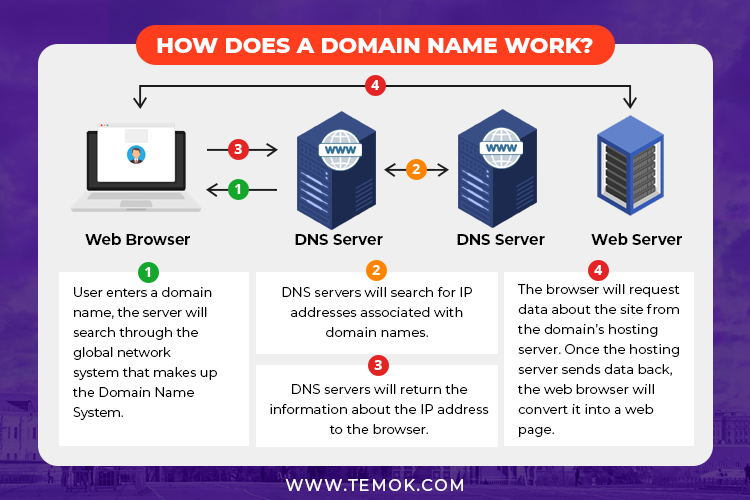
When a user types a domain name into a web browser, the browser sends a DNS query to a DNS resolver, which is a server that acts as an intermediary between the user’s device and the DNS system. The resolver then checks its cache to see if it has the IP address associated with the requested domain name. If the resolver does not have the IP address, it sends a request to one of the root DNS servers, which are responsible for storing information about the top-level domains (TLDs) such as .com, .org, .edu, and .gov.
The root DNS server responds to the request by providing the IP address of the authoritative DNS server for the TLD associated with the requested domain name. The resolver then sends a request to the authoritative DNS server, which is responsible for storing information about the domain names within the TLD. The authoritative DNS server responds with the IP address associated with the requested domain name, and the resolver returns the IP address to the user’s device.
Types of DNS Records:
There are several types of DNS records that are used to store information about domain names and IP addresses. The most common types include:
- A Record: This record maps a domain name to an IP address.
- MX Record: This record maps a domain name to the mail server that is responsible for handling email for that domain.
- CNAME Record: This record maps a domain name to another domain name. It is often used to create aliases for existing domain names.
- NS Record: This record identifies the authoritative DNS servers for a domain.
- PTR Record: This record maps an IP address to a domain name.
DNS Security:
DNS is a critical component of internet infrastructure, and its security is essential to protect against attacks that can compromise the integrity of the DNS system. Some of the common attacks on DNS include DNS cache poisoning, DNS spoofing, and DNS hijacking. These attacks can lead to unauthorized access to sensitive data, interception of communication, and denial of service (DoS) attacks.
To mitigate these threats, several security measures have been developed, including DNSSEC (Domain Name System Security Extensions), DNS over HTTPS (DoH), and DNS over TLS (DoT). These protocols provide end-to-end encryption and authentication to ensure that DNS queries and responses are secure and cannot be intercepted or modified by attackers.
Conclusion:
The Domain Name System is a critical part of the internet that enables users to access websites and other internet resources by entering domain names into web browsers. It provides a unified system for naming and addressing resources and helps to maintain and manage the internet. DNS security is essential to protect against attacks that can compromise the integrity of the DNS system, and several protocols have been developed to provide end-to-end encryption and authentication.



Leave a Reply