
A domain is a human-readable name that is used to identify and locate websites on the internet. In this article, we will discuss how domains work and the role of domain name servers (DNS) in translating domain names into IP addresses.

The Anatomy of a Domain Name A domain name is composed of two parts: the top-level domain (TLD) and the second-level domain (SLD). The TLD is part of the domain name that appears at the end of the domain, such as .com, .org, .net, or .edu. The SLD is the main part of the domain name, such as Google or Facebook. Together, the TLD and SLD make up the complete domain name, such as google.com or facebook.com.
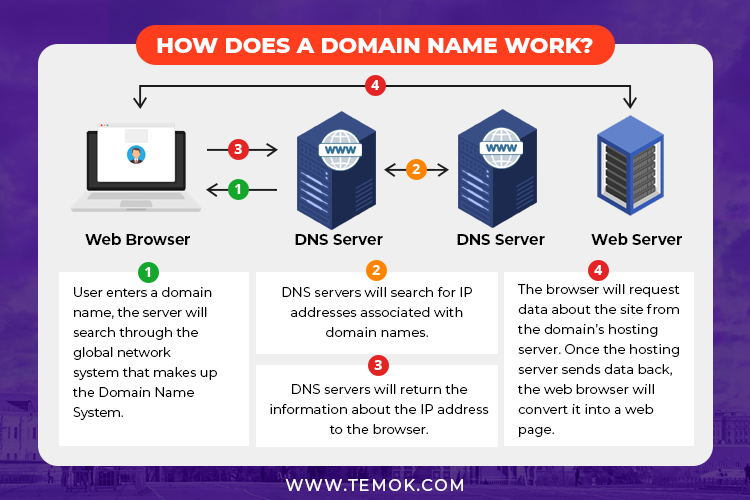
How Domains Work When a user types a domain name into a web browser, the browser sends a request to a DNS to look up the IP address associated with the domain name. The DNS is a distributed system that contains a database of domain names and their corresponding IP addresses. The DNS system is hierarchically organized, with a root domain at the top, followed by top-level domains, and then second-level domains.

The DNS system works by using a series of servers to resolve domain names into IP addresses. When a user types a domain name into their web browser, the browser sends a query to a DNS resolver, which is a type of server that looks up the IP address associated with the domain name. If the resolver does not have the IP address cached, it sends a query to a root server to find the authoritative server for the TLD of the domain name.
Once the authoritative server for the TLD is identified, the resolver sends a query to that server to find the authoritative server for the SLD. The SLD authoritative server then provides the IP address associated with the domain name to the resolver, which returns it to the user’s web browser. The browser then uses the IP address to connect to the website’s server and retrieve the website content.
The Role of DNS Records DNS records is used to provide additional information about a domain name, such as the IP addresses associated with the domain and the mail servers responsible for handling email for the domain. There are several types of DNS records, including:
- A record: associates a domain name with an IP address
- CNAME record: maps a domain name to another domain name
- MX record: identifies the mail servers responsible for handling email for a domain
- NS record: identifies the name servers responsible for the domain
DNS records are managed by the domain owner or their domain registrar and are used to configure the domain’s DNS settings.
In conclusion, domains work by using DNS to translate human-readable domain names into IP addresses that computers can use to locate websites on the internet. The DNS system is hierarchically organized, with a root domain at the top, followed by top-level domains and second-level domains. DNS records are used to provide additional information about a domain name, such as its associated IP addresses and mail servers.



Leave a Reply